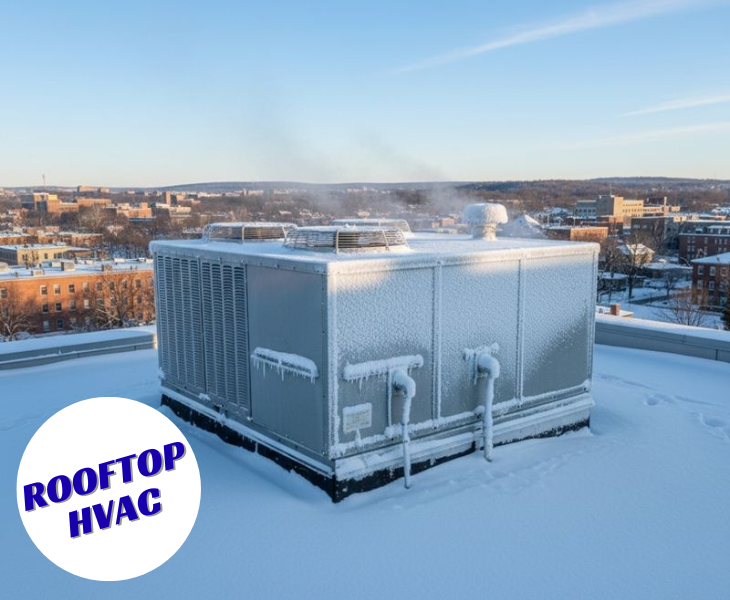

❄️ Why Rooftop HVAC Units Fail During Kansas Winters
Rooftop HVAC units are built to handle tough conditions, but Kansas winters put them under serious stress. 🌬️ When temperatures drop, wind increases, and snow or ice begins to accumulate, rooftop systems work harder than most people realize. ❄️🏢
For many facility managers and business owners, problems seem to appear suddenly. One day the system is working, and the next day the building has no heat. 🔥 In reality, most commercial rooftop HVAC problems in Kansas begin as small issues that slowly develop during the colder months.
Understanding what causes these winter failures can help prevent expensive downtime and emergency repairs. 💡
🥶 Why Winter Is Hard on Rooftop HVAC Units
Unlike indoor equipment, rooftop HVAC systems are exposed to the full force of the weather. Kansas winters bring a combination of:
• Freezing temperatures 🌡️
• Strong winds 💨
• Snow and ice accumulation ❄️
• Sudden temperature swings 🌪️
These conditions create additional strain on components like burners, coils, motors, and electrical controls. ⚡ When maintenance is delayed or small issues go unnoticed, winter conditions often push systems past their limits. 🛑
🔧 Common Winter Problems That Cause Rooftop HVAC Failures
❄️ Frozen Coils and Ice Buildup
One of the most common problems occurs when airflow is restricted and moisture freezes on coils. Ice buildup can lead to:
• Reduced airflow 🌬️
• Poor heating performance 🔥
• System shutdowns ⛔
• Damage to internal components ⚙️
Once coils freeze, the system may struggle to maintain proper building temperature. 🏢
💨 Airflow Restrictions
Proper airflow is essential for HVAC performance. During winter, airflow can be restricted due to:
• Dirty filters 🧹
• Blocked intake vents 🚫
• Ice buildup around the unit ❄️
• Damaged ductwork 🛠️
Restricted airflow forces the system to work harder, often causing overheating or shutdowns. Early signs include:
• Uneven heating in the building 🌡️
• Longer run times ⏱️
• Higher energy bills 💸
🔥 Ignition and Burner Failures
Gas-powered rooftop units rely on ignition systems to start the heating cycle. Cold temperatures and moisture can cause problems with components such as:
• Flame sensors 🔥
• Ignition modules ⚡
• Burners 🔥
• Gas valves ⛽
Failure in these components can cause repeated attempts to start without proper ignition, leaving buildings cold. 🥶
⚡ Electrical Component Stress
Electrical components suffer during temperature swings. Expansion and contraction can lead to:
• Loose electrical contacts 🔌
• Control board issues 🖥️
• Sensor malfunctions 🛠️
• Short cycling 🔄
These issues may appear intermittently at first but can eventually lead to complete system failure. ❌
🕒 Deferred Maintenance
One of the biggest contributors to rooftop HVAC failure is skipping routine maintenance. ❗ Without inspections, small issues like worn belts, dirty coils, or weak motors worsen over time. Preventive maintenance helps catch these problems early. 🛡️
At Titan Mechanical, we often see rooftop systems fail simply because small maintenance needs were postponed earlier in the year. 🏢
👀 Signs Your Rooftop HVAC System May Be Struggling
Facility managers and business owners should watch for early warning signs:
• Inconsistent heating throughout the building 🌡️
• Unusual noises from rooftop equipment 🔊
• Systems running longer than normal ⏱️
• Increased utility bills 💰
• Frequent cycling on and off 🔄
These signs usually indicate underlying issues that should be inspected before a full breakdown occurs. ⚠️
🛡️ How Preventive Maintenance Helps
Routine inspections are one of the most effective ways to prevent costly rooftop HVAC failures. ✅
A proper RTU maintenance checklist typically includes:
• Inspecting burners and ignition systems 🔥
• Checking airflow and filters 🌬️
• Examining electrical connections ⚡
• Inspecting belts and motors ⚙️
• Cleaning coils and internal components 🧽
• Verifying thermostat and control operation 🌡️
Inspections help technicians identify problems early while repairs are still simple and affordable. 💡
🏢 Protecting Your Building From Unexpected Downtime
When a rooftop HVAC system fails during winter, the consequences can be serious. Businesses may face:
• Disrupted operations 🛑
• Uncomfortable work environments ❄️
• Tenant complaints 😡
• Emergency repair costs 💸
Preventive maintenance and early repairs help keep systems operating reliably throughout the winter months. 🏗️
💭 Final Thoughts
Rooftop HVAC units are designed for durability, but Kansas winters can expose even small weaknesses. Most breakdowns don’t happen suddenly—they develop over time through airflow issues, freezing components, or deferred maintenance. 🥶
Understanding the most common rooftop HVAC problems allows facility managers and business owners to address issues early and avoid unexpected failures. Regular inspections, proper maintenance, and timely repairs are the best way to keep rooftop systems operating safely and efficiently all winter long. ✅
If your building’s HVAC system has been showing signs of trouble, addressing it early can prevent larger problems later. The team at Titan Mechanical works with commercial properties across the region to keep rooftop systems running reliably through every season. 🏢❄️

0 Comments